Townsville homes face constant structural stress from extreme factors like cyclones, high humidity, reactive (clay) soils, and relentless termite activity. While minor settling is normal, true structural damage can compromise your home’s safety, stability, and insurance standing, quickly escalating into costly repairs if left unchecked.
In this article, we’ll provide a comprehensive guide to the most common warning signs, explain what typically causes them in Townsville’s challenging conditions, and clarify when it’s time to bring in a professional so you can protect your most valuable asset before the damage worsens.
Table of Contents
- What Is Structural Damage?
- Cracks in Walls, Floors, and Ceilings
- Uneven or Sloping Floors
- Doors and Windows That Stick
- Dampness and Water Damage
- Termite and Pest Damage
- Cracks or Damage in Foundations
- Roof and Ceiling Problems
- Corrosion and Rusting in Structural Metalwork
- Other Warning Signs
- Structural Damage Warning Signs and Recommended Actions
- Conclusion
- FAQs
What Is Structural Damage?
Structural damage is any issue that significantly weakens or compromises the core, load-bearing components of a building, such as the foundation, footings, load-bearing walls, beams, columns, floor framing, or roof structure. When these essential elements are affected, the building can no longer perform as designed, and its overall stability and safety are put at serious risk.
According to the Australian Standard AS 4349.1-2007, a structural defect is “a deviation from the intended performance of a building element that affects the building’s ability to perform its function”.
The Townsville Difference
This type of damage is fundamentally different from simple cosmetic defects like small plaster cracks or chipped paint. Structural issues usually develop because the building has been chronically stressed by local factors, which are amplified in Townsville:
- Reactive Clay Soils: Townsville often has clay-rich soils that expand when wet and contract when dry. This constant, uneven movement is the single largest non-cyclonic cause of foundation failure.
- Cyclonic Wind Loading: Extreme wind and pressure changes can stress roof connections and wall framing, causing movement or component failure, especially in older homes.
- High Humidity and Rainfall: Sustained moisture promotes timber rot, corrosion, and activates termites.
- Pest Infestations: Termites thrive in the tropical climate and can destroy the timber frame of a home in months.
Common Local Causes
| Cause | Specific Townsville Risk Factor |
| Soil Movement | Highly reactive clay soils (expansion/contraction), erosion near footings. |
| Water Ingress | Intense tropical rainfall, poor site drainage, and plumbing leaks. |
| Pest Infestations | Subterranean termites are highly active year-round in the tropical climate. |
| Severe Weather | Cyclones (high winds, storm surge, flooding) stressing the building envelope. |
| Lack of Maintenance | Ignoring minor roof leaks or plumbing issues allows water damage to progress unnoticed. |
Important: Significant damage can threaten safety, lead to steep repair costs, severely reduce property value, and potentially complicate insurance claims.
Cracks in Walls, Floors, and Ceilings
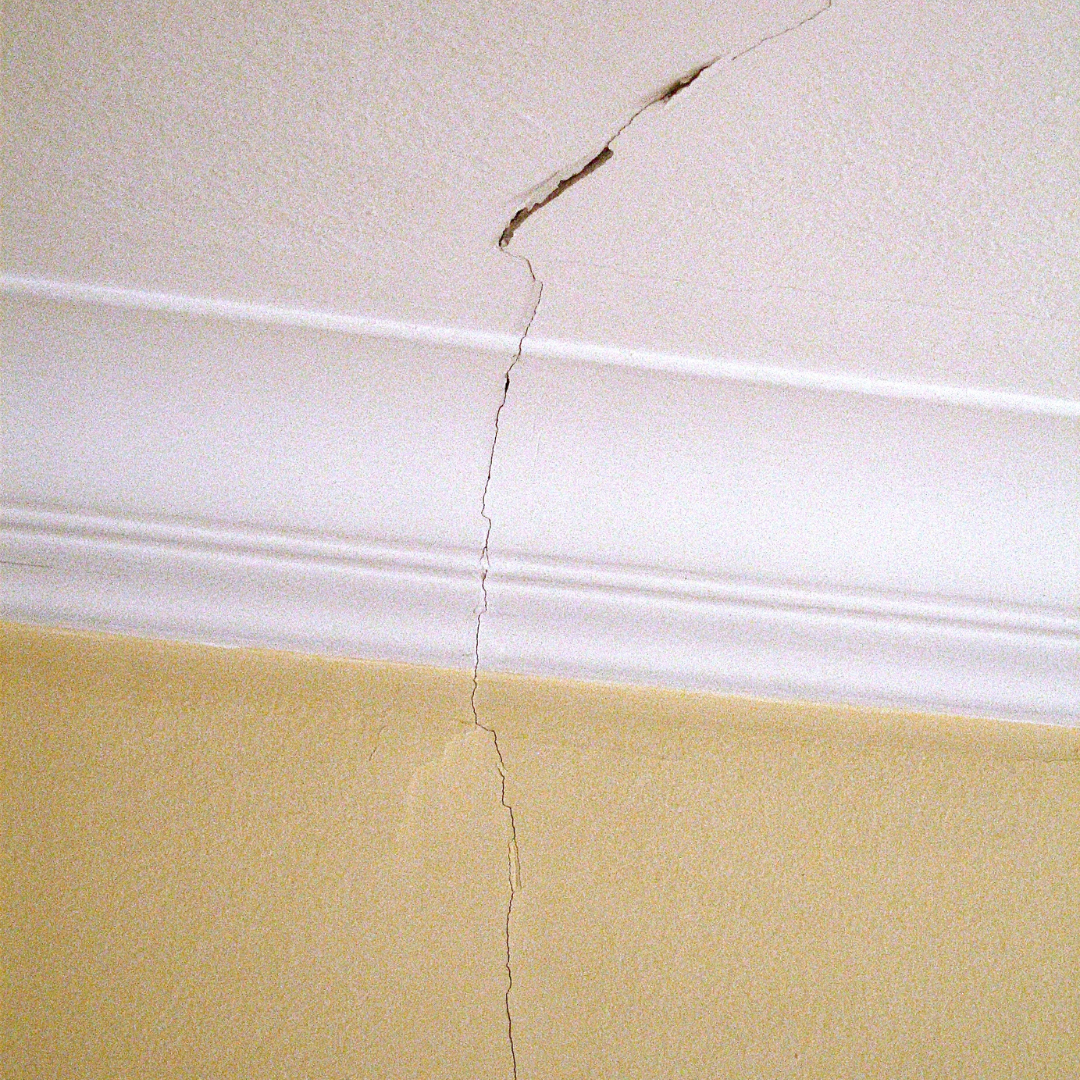
Cracks are often the first and most visible indicator of underlying structural distress or movement.
Signs to Watch For
- Width is Key: Any crack wider than three millimetres (3 mm) should be professionally investigated. The width often indicates the severity of the underlying movement.
- Pattern: Look for horizontal, diagonal, or stair-step patterns in brickwork, blockwork, or concrete. These patterns follow lines of weakness and are classic signs of foundation subsidence or heave.
- Location: Cracks that radiate outwards from the corners of doors and windows, or cracks that span across different materials (e.g., between brick and plaster).
- Progression: Cracks that keep growing or changing width over time, often visible after a period of heavy rain or prolonged dryness.
- Associated Symptoms: Cracks accompanied by sagging floors or sticking doors are a major red flag for structural movement.
Townsville Causes
The rapid expansion and contraction of local clay soils due to seasonal moisture changes are the most common driver of these cracking patterns.
Recommended Action: Immediate professional building inspection is essential to determine the cause and severity.
Uneven or Sloping Floors
Floors that sag, slope noticeably, or feel unusually “bouncy” when walked on are strong indicators of issues within the subfloor structure or foundation.
Causes
- Foundation Settlement/Heave: Uneven movement of the footings or slab, causing the entire floor plane to tilt.
- Subfloor Water Damage: Prolonged leaks or poor ventilation cause rot in timber bearers and joist connections.
- Termite Infestation: Termites are eating away the structural integrity of timber floor joists and bearers, causing them to bow or fail.
- Construction Defects: Improperly spaced or supported subfloor members from the original construction.
A marble test can reveal uneven floors; if you place a small object such as a marble on the floor and it consistently rolls to the same spot, the surface may not be level. You might also notice visible gaps forming under internal doors or between the wall skirting and the floor. In addition, uneven flooring can be indicated by noticeable slopes or bumps across a room or at the points where two different floor coverings meet.
Action: Have a qualified inspector or structural engineer assess the floor promptly. Depending on the cause, repairs may involve fixing the foundation, replacing damaged subflooring, or treating termite or water damage. Early intervention prevents further structural problems.
Doors and Windows That Stick
A door or window that suddenly begins to jam, bind, or is difficult to open and close is often a symptom of the surrounding frame moving, which reflects structural shifting.
Causes
- Wall Movement: Foundation settlement can twist the wall frame, distorting the rectangular opening of the door or window.
- High Humidity: While timber can warp due to humidity, if multiple doors/windows are affected across different parts of the house, it points to a larger structural issue, not just local warping.
- Frame Failure: The lintel (beam above the opening) may be failing due to excessive load, rust, or poor support.
Action: Check if the issue affects multiple openings, especially on the same wall. If so, it is highly likely to be a sign of significant structural movement.
Dampness and Water Damage
Moisture is the silent killer of structural integrity. Prolonged exposure to water weakens materials, promotes biological decay (rot), and activates termites.
Signs
- Staining: Persistent water stains, dark patches, or tide marks on ceilings and walls.
- Material Breakdown: Soft spots, spongy flooring, or walls that feel damp to the touch.
- Visual Decay: Peeling paint, blistering plaster, efflorescence (white, powdery salt deposits) on masonry, or visible mould/mildew growth.
Causes
- Roof Leaks: Damaged tiles, flashing, or membrane allowing water into the roof cavity, soaking structural timbers.
- Plumbing Faults: Slow, persistent leaks inside walls or under slabs (e.g., leaking showers, pipes).
- Poor Drainage/Rising Damp: Inadequate external grading allows water to pool near the foundation, leading to rising damp in masonry or wetting of subfloor timbers.
Critical Townsville Concern: The combination of tropical downpours and high humidity means water damage progresses extremely quickly, making early detection and repair vital.
Termite and Pest Damage
Townsville’s tropical climate creates an ideal environment for subterranean termites, which pose an existential threat to all timber-framed homes. Termite damage is structural damage.
Indicators
- Hollow Timber: Knock on timber framing, skirting boards, or architraves. A hollow or dull sound can indicate the timber inside has been consumed.
- Mudding: Look for mud tubes (shelter tubes) built by termites on foundation walls, piers, subfloor timbers, or trailing up internal walls.
- Damage: Visible nests, or wood that appears blistered, sagging, or easily penetrated by a screwdriver.
Action: Do not disturb or spray the termites. This drives them elsewhere and makes professional eradication more difficult. Immediately engage a licensed pest inspector who specialises in the North Queensland climate for urgent assessment and treatment.
Cracks or Damage in Foundations
The foundation, whether a concrete slab or strip footings, is the structural base of the entire home. Damage here directly translates to movement in the walls and roof.
Warning Signs
- Slab Cracks: Significant cracks (wider than 3 mm) running through the concrete slab floor, especially if they show vertical displacement.
- Footing Movement: Sinking, lateral (sideways) movement, or cracking of the strip footings or perimeter beams visible around the house’s exterior.
- Associated Cracks: Hairline foundation cracks are often harmless, but if they are accompanied by wide wall cracks or sticking doors, they require immediate assessment.
Causes
The primary causes are soil movement (shrinkage/swelling) and erosion (water washing away supporting soil). Poor compaction during construction or invasive tree roots can also be contributors.
Action: Minor cracking is common, but any crack that is growing, weeping water, or showing vertical shift must be assessed by a structural engineer to guide necessary and costly repairs like underpinning.
Roof and Ceiling Problems
Roof and Ceiling Problems
The roof structure is a primary load-bearing element, designed to transfer weight and handle extreme wind uplift, especially during a cyclone.
Signs of Structural Failure
- Sagging Roofline: A visible dip or bow along the ridge line or fascia when viewed from outside.
- Bowed Ceilings: Ceiling panels or plaster that are bowing or sagging downwards, often indicating roof structural timbers (rafters, trusses) are failing or have been soaked by a leak.
- Water Damage: Extensive water staining on rafters or the ceiling lining, often caused by cyclone damage, persistent gutter overflow, or aged materials.
- Loose Connections: Missing or rusted tie-down straps, battens, or connections designed to secure the roof to the walls in a cyclone.
Action: Roof structural damage not only causes leaks but can threaten the stability of the entire building. Have a structural engineer assess the roof immediately and implement any necessary repairs or reinforcements.
Corrosion and Rusting in Structural Metalwork
Given Townsville’s proximity to the coast and high humidity, the risk of corrosion is significant.
The Risk
Metal structural components, such as steel beams, column bases, rebar (reinforcing steel) within concrete, and critical connection bolts/straps,can rust. Rust (iron oxide) takes up more volume than the steel it replaces, which can stress the surrounding concrete and cause it to spall (flake away). Rusting significantly reduces the strength and cross-section of the metal, leading to structural weakening and potential catastrophic failure.
Action: Look for visible rust streaks, bubbling paint on steelwork, or cracking concrete near metal components. Timely inspection and repair (often involving rust conversion and re-coating) are essential.
Other Warning Signs
Always be vigilant for subtle changes that may signal more significant underlying issues.
- Bulging or Bowing Walls: Walls that are visibly leaning outwards or inwards, indicating a lateral (sideways) load or failure of internal support.
- Gaps Around Door or Window Frames: Gaps forming between the frame and the surrounding wall materials.
- Cracks Near Chimneys or Verandahs: These areas are often supported by their own footings, and cracks where they meet the main house structure indicate differential settlement.
- Unusual Sounds: Persistent or loud creaking, popping, or groaning sounds that were not previously present.
Structural Damage Warning Signs and Recommended Actions
This table summarises the most common Townsville warning signs and the appropriate urgency of action.
| Warning Sign | Typical Local Cause | Urgency / Recommended Action |
| Wide Cracks (>3 mm) in walls/floors | Foundation movement (soil heave/subsidence) | Immediate: Arrange a professional building inspection. |
| Uneven/Sloping Floors | Joist damage, termite activity, foundation movement | High: Monitor and consult an inspector to investigate subfloor. |
| Sticking Doors/Windows (multiple locations) | Structural shifts, foundation issues | High: Check multiple areas and call a building inspector. |
| Water Stains/Soft Spots/Mould | Roof leaks, plumbing faults, rising damp | Urgent: Investigate and repair the moisture source immediately. |
| Termite Evidence (mudding, hollow wood) | Subterranean termites | Urgent: Engage a licensed pest inspector immediately (do not disturb). |
| Roof Sagging, Bowed Ceilings | Storm damage, timber decay, heavy loads | High: Requires structural engineer assessment and repair plan. |
| Rusted Metalwork (beams, rebar spalling) | High humidity, coastal salt corrosion | High: Professional assessment and anti-corrosion repair. |
Conclusion
Structural damage can compromise not only the safety and stability of your home but also its market value and insurability. Townsville homes face heightened, year-round risks from tropical weather, high humidity, cyclones, reactive soils, and aggressive termites.
Early detection and action are absolutely crucial. If you notice any of the warning signs discussed, the next step is to schedule a professional building and pest inspection.
TCBPI’s licensed inspectors specialise in the unique construction and climate challenges of North Queensland, providing thorough assessments, detailed reports, and clear guidance on the necessary repairs and maintenance.
Call TCBPI today at 07 4723 2770 or enquire online to protect your home and gain peace of mind.
FAQs
How do I know if a crack is serious?
Cracks wider than three millimetres, those that are horizontal or follow a stair-step pattern in masonry, or cracks accompanied by secondary symptoms like sagging floors or sticking doors, usually indicate structural issues. Professional inspection is essential to measure movement and determine the cause.
Can structural damage happen in new homes?
Yes. Poor site preparation, inadequate slab reinforcement, foundation settlement on reactive Townsville soil, or water damage from plumbing faults can affect even brand-new homes. The key is quality control and immediate attention to warning signs.
How quickly should I act if I notice damage?
Immediately. Structural issues are almost always progressive. Early intervention prevents further damage, reduces the scope of required work, and significantly lowers overall repair costs.
Can termites cause damage without me noticing?
Yes. Termites are experts at remaining hidden inside wall cavities and subfloors, often working behind plasterboard and paint. The first visible sign is often severe damage or a mud tube. Regular (annual) inspections by a licensed pest inspector are the best defence.
Who should I contact?
Start with a qualified building inspector who can diagnose the cause and severity. If the inspector confirms a severe structural issue (e.g., major foundation movement), they will recommend you engage a structural engineer to design the specific, compliant repair solution (e.g., underpinning plans).
Can minor structural issues affect insurance?
Yes. Most insurance policies require you to properly maintain your home. Ignoring a known, worsening structural issue may lead to the rejection of a future claim, as the insurer may argue the damage was preventable and due to a lack of maintenance, not a sudden event.